Cable and fixed wireless reach the home differently. Cable uses a physical line into the property. 5G home internet uses a nearby wireless network through a gateway inside your home. That difference shapes speed consistency, setup, and troubleshooting.
Check availability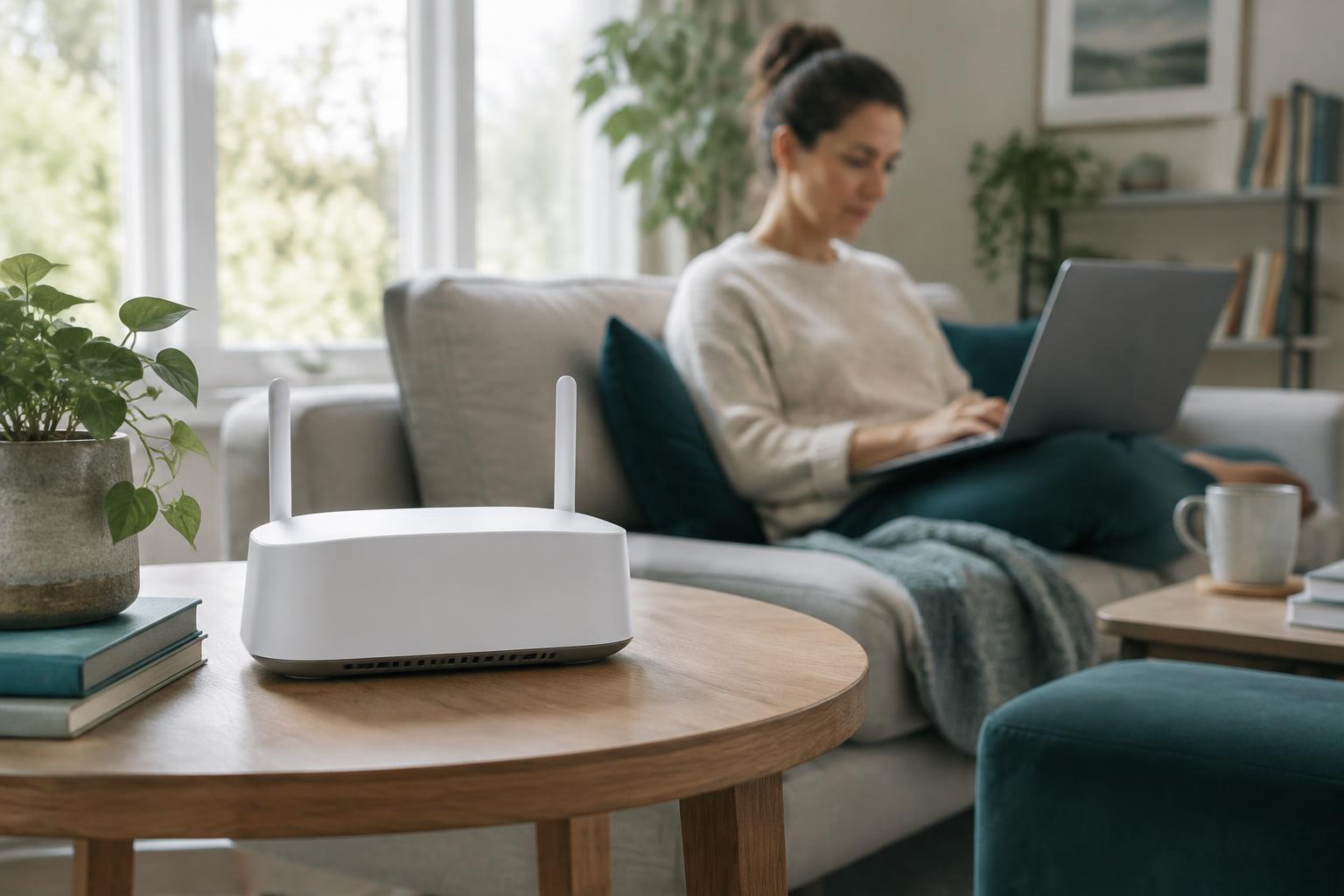
How the connections differ
Cable capacity is shared within a local service area, while fixed wireless capacity depends on radio conditions and traffic at the serving site. Either can slow during busy periods. What matters is the range you experience when your household is actually online.
Do not compare only a maximum download figure. Video calls, cloud backups, gaming, security cameras, and remote access can make upload performance, latency, or network configuration equally important.
Review bundle optionsWhat your address changes
Walls, windows, trees, terrain, floor level, and gateway placement can affect wireless service. Availability may be limited even where phones show a signal because home internet requires enough local capacity for sustained use.
Address-specific availability and offersContent pending editorial reviewHow to test it
If a trial or return window is available, confirm its terms before ordering. Place the gateway in recommended locations and test from the rooms where you work, stream, and make calls. Repeat tests in the morning and evening over several days.
Test the work, not just the speed test
- Join a video call while another device streams
- Upload a large file or photo library
- Check gaming or remote-desktop responsiveness
- Confirm smart-home and security devices reconnect
- Test every floor and important room over Wi-Fi
How to choose
Choose based on stable performance, total recurring cost, equipment terms, and the difficulty of changing back. If internet access is essential for work or health needs, overlap the old and new services until the replacement has proved reliable.